Tatami comes in several styles.
Some are finished with a Border (Heri), while others are made without one.
Below is a simple guide to the main variations.
Glossary
- Surface (Omote) :
- the woven top layer of a tatami.
- Border (Heri) :
- the fabric edge that protects the sides and corners of a tatami mat.
- Ryukyu Tatami :
- a traditional Okinawan tatami style, typically made without a Border.
- Ryukyu-style tatami:
- a modern Borderless style inspired by Ryukyu Tatami.
- Tokonoma (alcove):
- a decorative alcove in a traditional Japanese room.
Note: From here on, this page uses the shorter forms Omote and Border.
Tatami with Border (Heri)
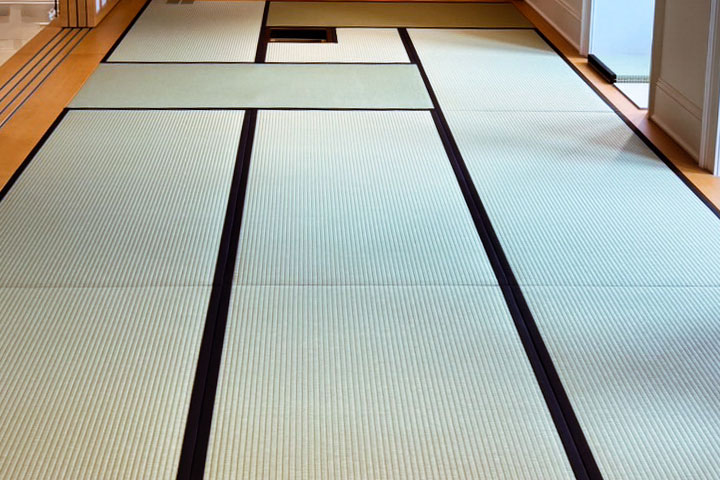
This is the most common style of tatami. It is widely used in many settings—from private homes to temples and shrines. The Border helps protect the edges and corners while also adding a decorative accent.
You can choose the Border’s material, color, and pattern to suit your style—from traditional designs to modern options.
More about Border (Heri)(border)Tatami without Border (Heri)
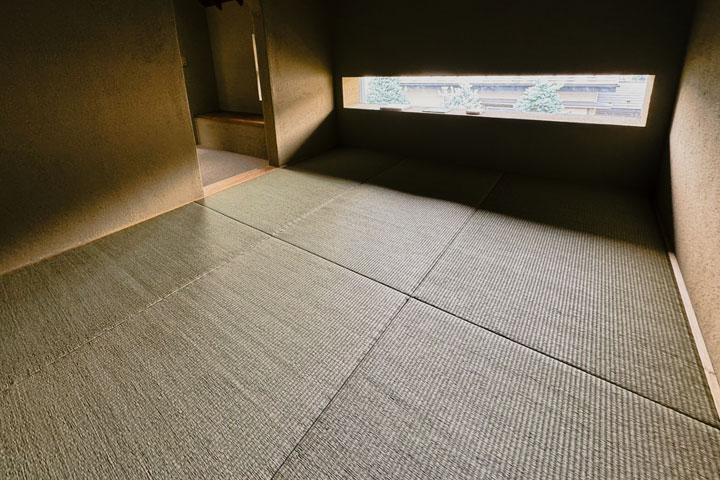
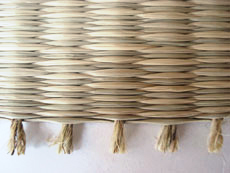
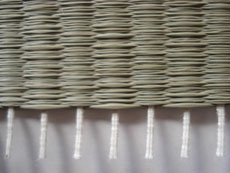
This category includes Ryukyu Tatami (traditional Okinawan style) and Ryukyu-style tatami (a modern Borderless style inspired by it). In recent years, demand has grown thanks to their clean, modern look and the wide range of available colors.
These mats can also be made thinner than standard tatami, making them a practical option for laying over existing wooden floors.
Because this style requires advanced craftsmanship and takes more time to produce, it is not well suited to mass production and often costs more than tatami with a Border.
Omote options often used for this style (first mention):
- Ryukyu-omote: a traditional Omote associated with Ryukyu Tatami.
- Meseki-omote: a popular Omote option for Ryukyu-style tatami, known for its wide range of colors.
Tokonoma (alcove) Tatami
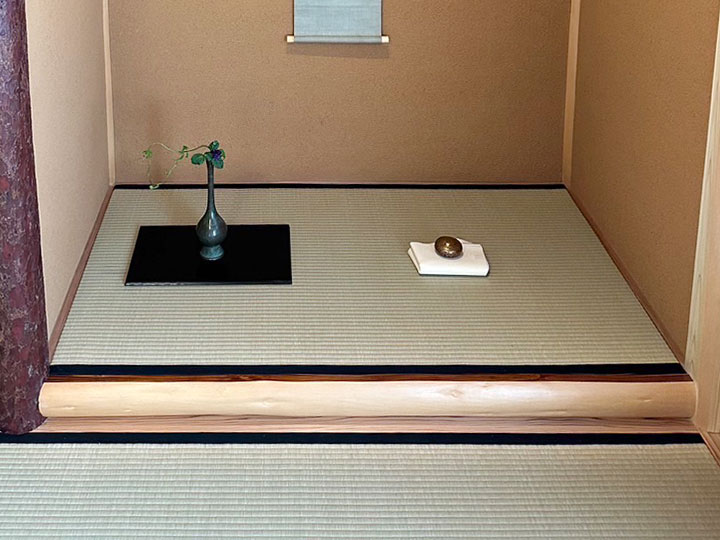
Tokonoma (alcove) tatami is made for a tokonoma (alcove)—a decorative alcove in a traditional Japanese room.
Traditionally, a premium Omote called Ryubin-omote is used for tokonoma (alcove). However, in recent years it has also become common to use a standard Omote or Usu-datami, depending on the space and design.
Portable Tatami
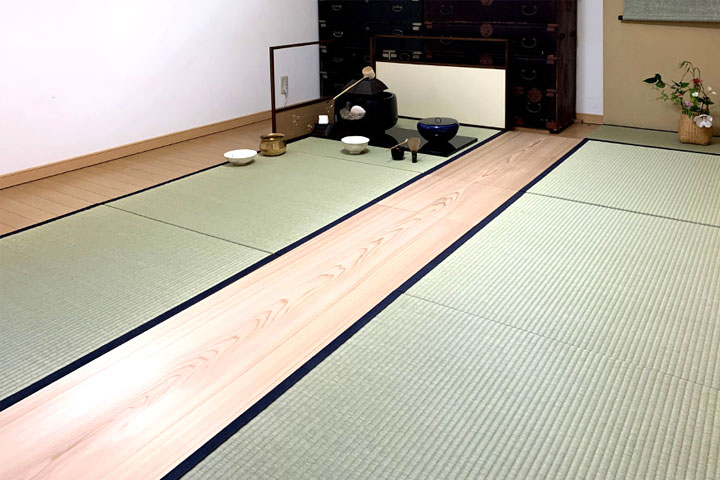
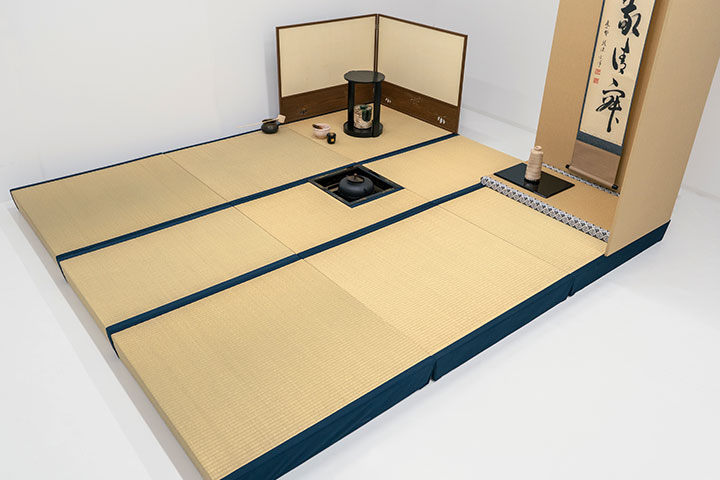
Portable tatami are lightweight mats that you can carry and place directly on the floor—no installation needed. They can instantly add a Japanese touch to any space, and they are also used in many practical ways, such as an alternative to a bed mat.
To reduce weight, portable tatami typically use a building-material core as the Filling (Toko). The Surface (Omote), however, varies widely—from cost-focused imported options to high-quality Japanese-made surfaces suitable for tea gatherings.
At our shop, we manufacture and sell only premium portable tatami made with Japanese Igusa (Rush).