It is true that natural straw can become a nutrient source for mold or mites in very humid environments.
However, modern Wara-toko is thoroughly dried and heat-treated during production, greatly reducing this risk compared with older straw fillings.
For daily care, good ventilation and avoiding excessive humidity are the most important points.
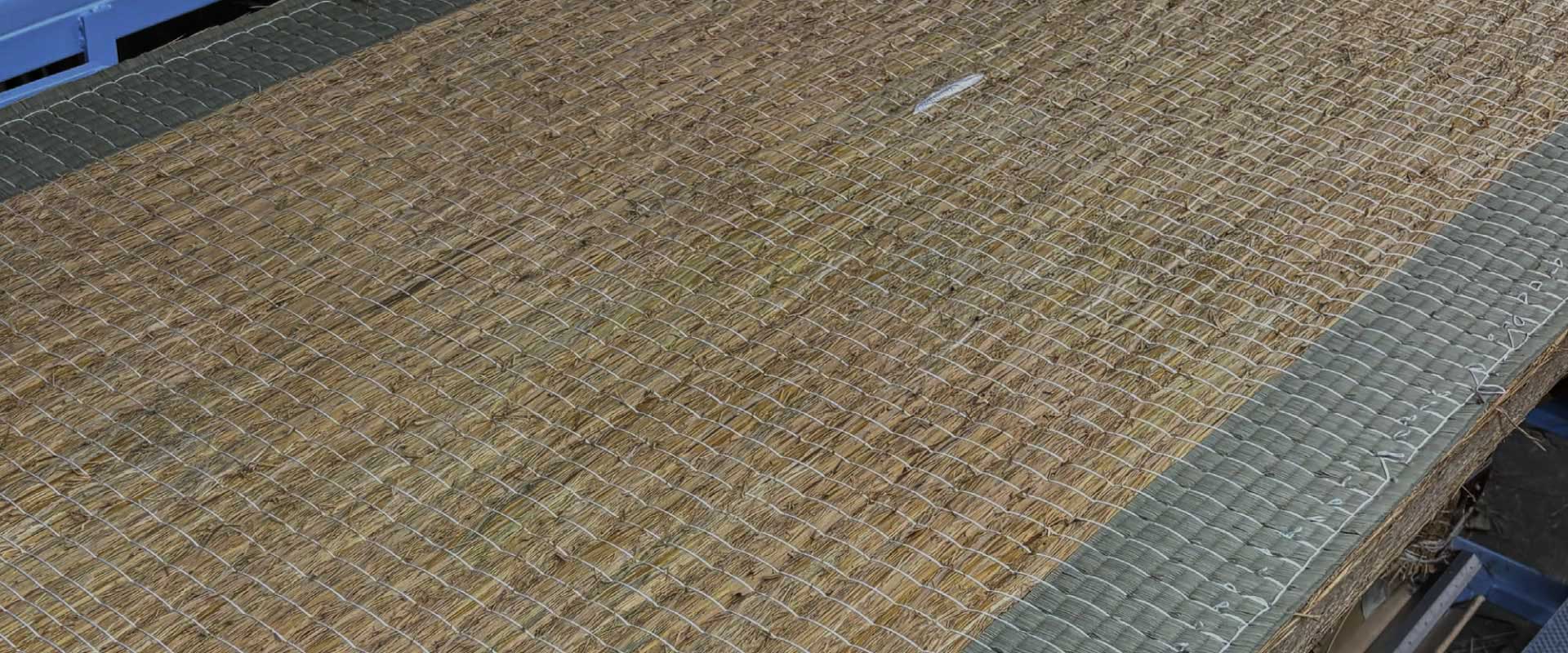
Wara-toko
(Traditional Straw Filling)
The Appeal of Wara-toko Tatami Fillings
A filling material born from generations of wisdom.

1.
Exceptional Humidity
Control and Insulation
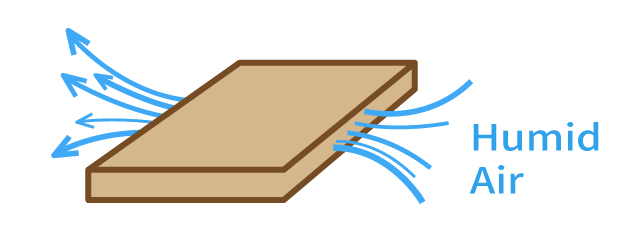
Each strand of rice straw contains countless air pockets that “breathe”—absorbing and releasing moisture.
This natural function keeps floors cool and dry under bare feet in summer, and blocks cold air in winter, providing comfort throughout all seasons.

2.
Outstanding
Durability and Resilience
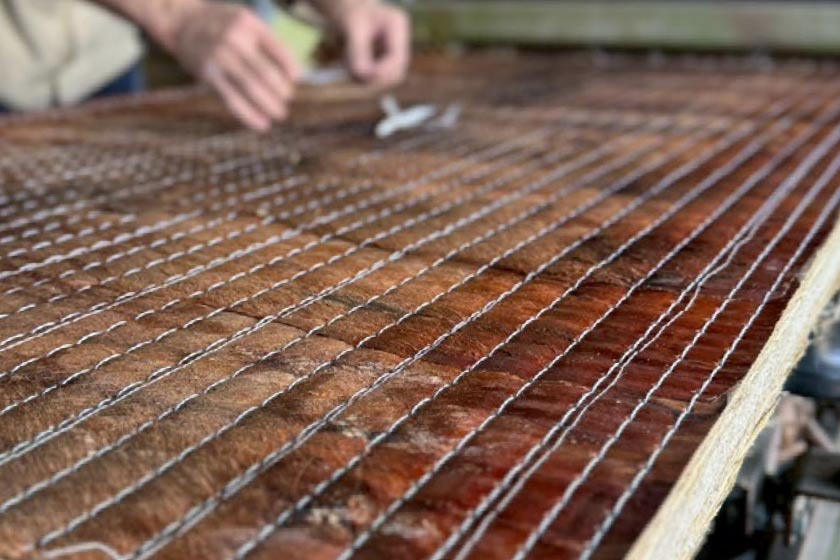
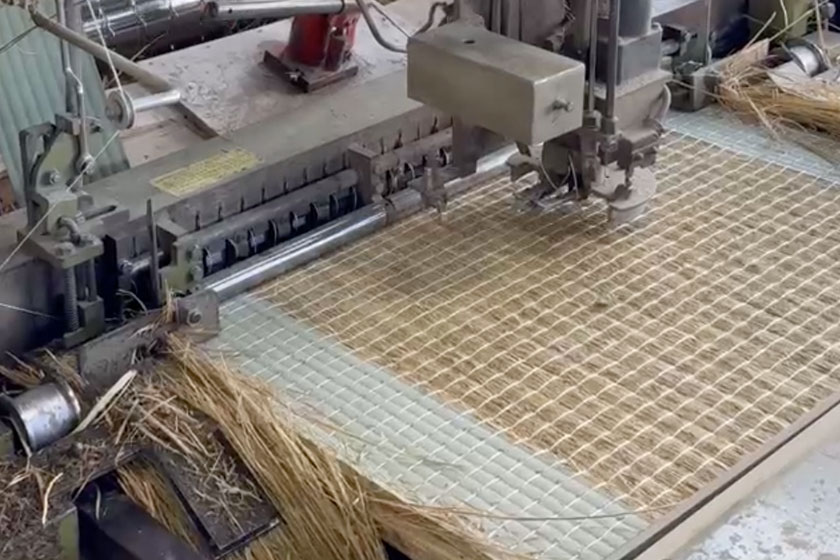
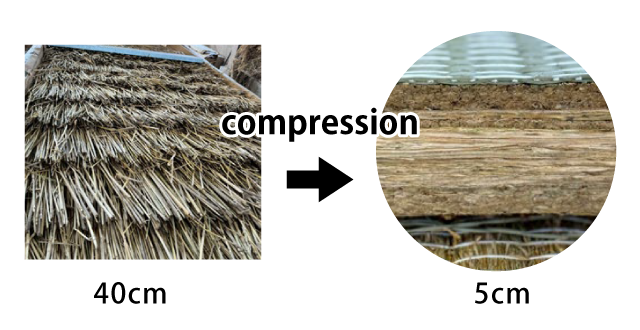
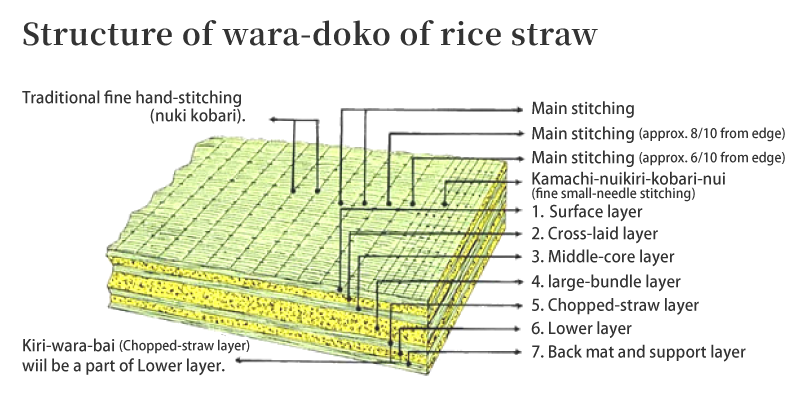
The high durability of Wara-toko comes from a traditional compression technique in which layers of straw are tightly sewn together using hundreds of stitches.
This process unifies the straw fibers, creating firm elasticity and excellent recovery that prevents sagging.
With proper care, Wara-toko tatami can last 100–200 years.

3.
Gentle on
Health and the Environment
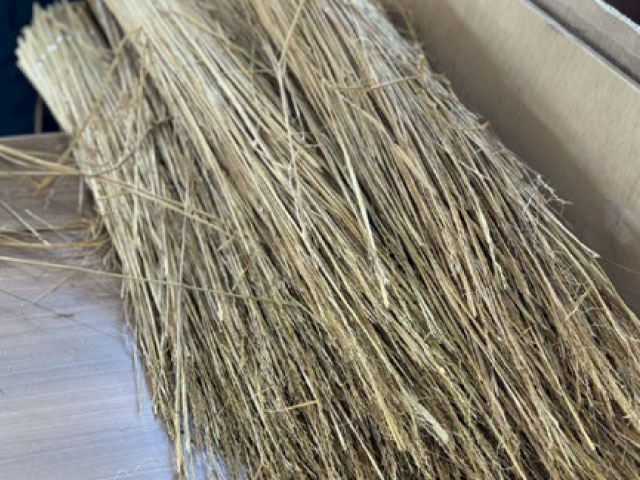
Wara-doko is made from 100% natural rice straw with almost no chemicals.
It is safe for people concerned about allergies and gentle enough for children.
As a renewable natural material, it also has an extremely low environmental impact.
Wara-toko:
A “Craftsmanship Masterpiece”
Unlike Synthetic Fillings:
Its Price Reflects Skill and Time
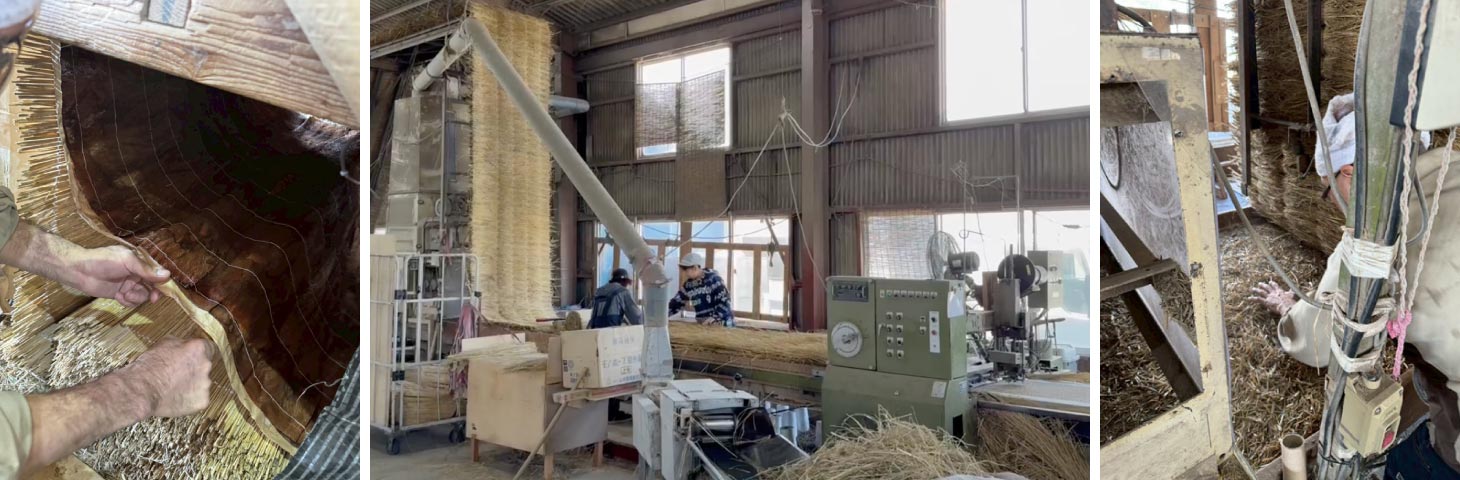
Modern synthetic fillings are machine-made for efficiency.
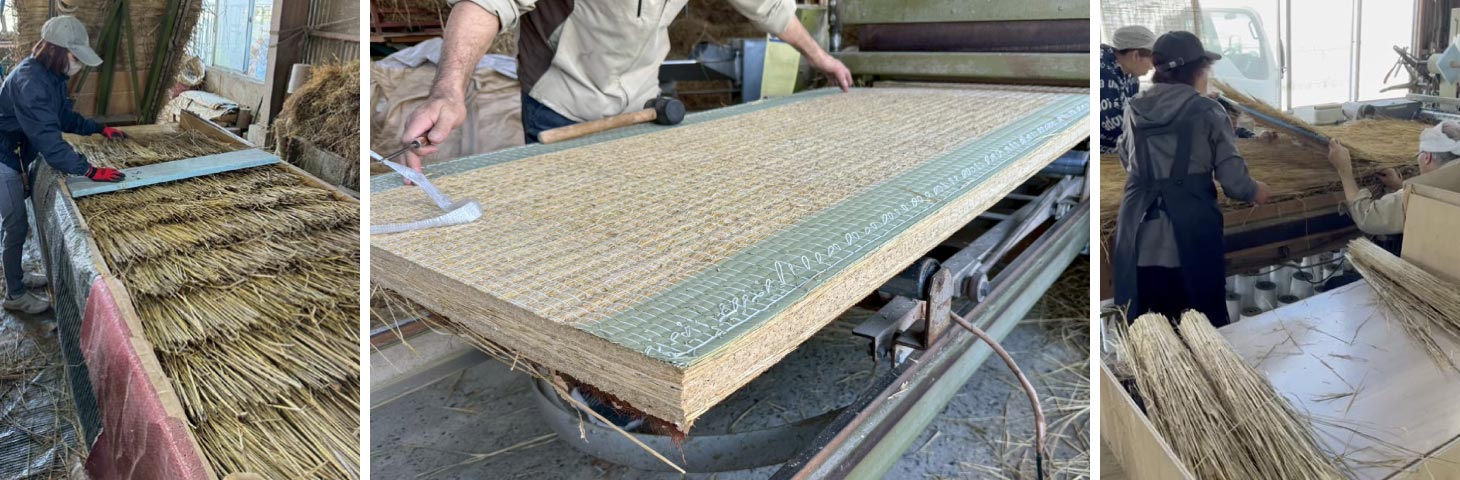
In contrast, Wara-toko is created entirely through skilled handwork, transforming raw straw into an ideal tatami filling.
Its higher price represents not just the material itself, but the rare craftsmanship required to make it.
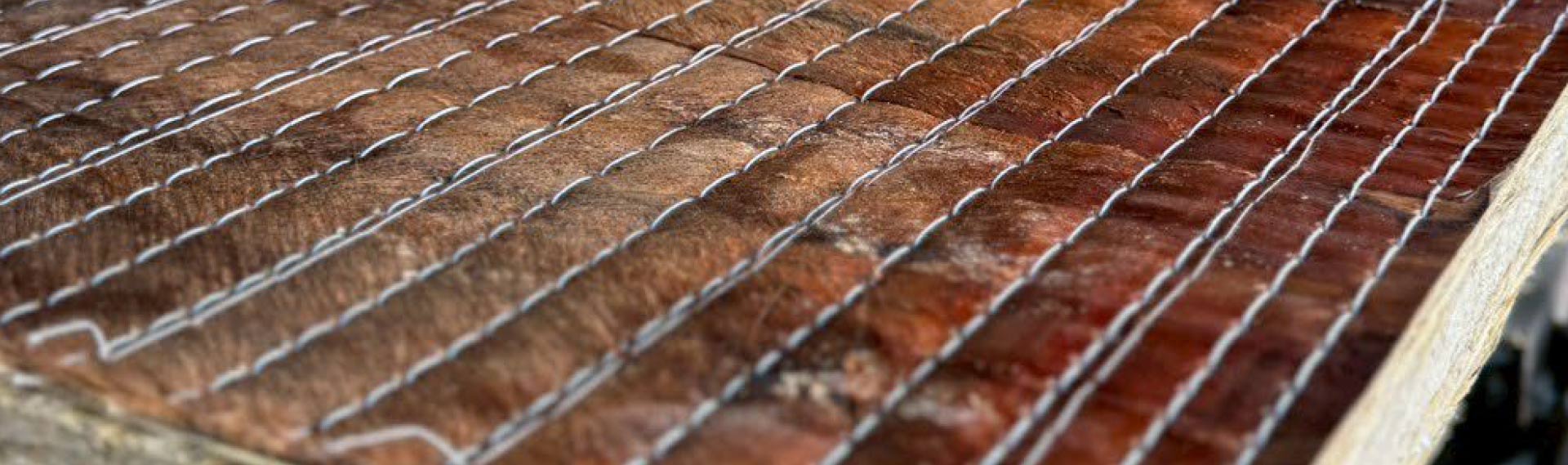
Grades of Wara-toko
Wara-toko fillings are graded from “Premium Grade” (Tokkyū) down to Grade 3.
Higher grades use more rice straw and have more layers of carefully arranged fibers.
They maintain consistent thickness, superior resilience, and excellent recovery from dents made by furniture or by needle holes from multiple re-coverings.
Corners and edges also maintain their shape better.
Quality Comparison
| Quality Grade | Material Weight (92W) g |
Warp–Weft Spacing Area (㎤) |
Recommended Use | |
|---|---|---|---|---|
| Top-grade Tatami Base | Premium Grade | 30.4 ~ 34.6 | 8.0 or less | For Tea Rooms and Traditional Temples/Shrines |
| Premium-quality, Comparable to Top Grade |
Grade 1 | 28.2 ~ 32.4 | 8.1 ~ 9.5 | For Tea Rooms and high-end residential use |
| For Standard Home Use | Grade 2 | 26.0 ~ 30.2 | 9.6 ~ 12 | Mid-range product for general residential use |
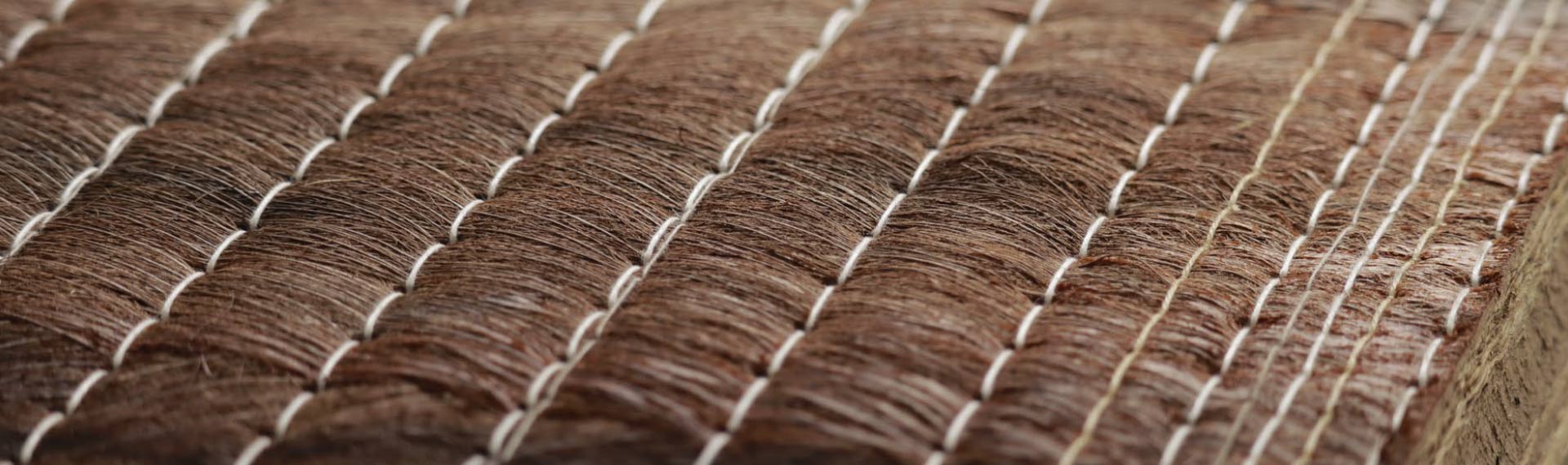
Attention to Materials
Back Side Options
The underside of Wara-toko has four types: “P-ura,” “Komo-ura,” “Tanba-ura,” and “Shuro-ura.”
Each differs in durability, appearance, and grade, and can be selected as an optional upgrade.
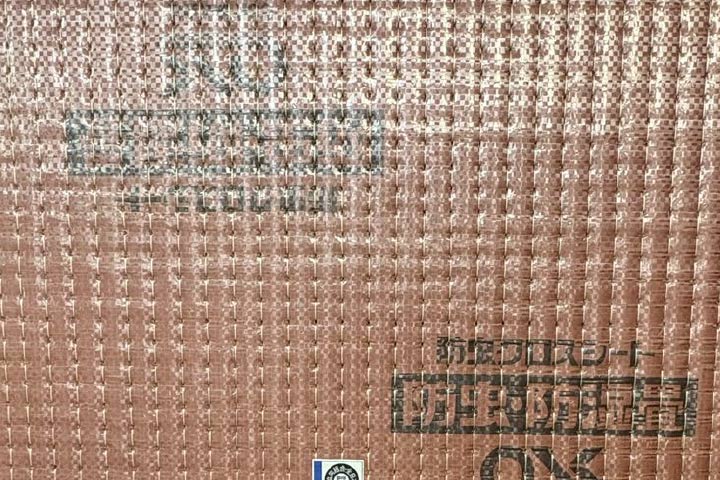
P-ura
Made by bonding polyester sheets or mesh-like materials to paper.
This is the modern standard specification for Wara-toko.
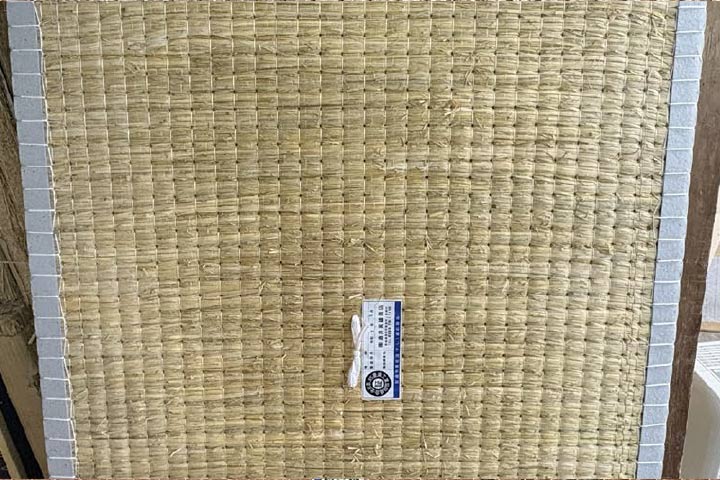
Komo-ura
A coarse mat woven from rice straw and similar materials.
A traditional method still used in some regions.
Optional upgrade: +5,000 yen per mat (excluding tax)
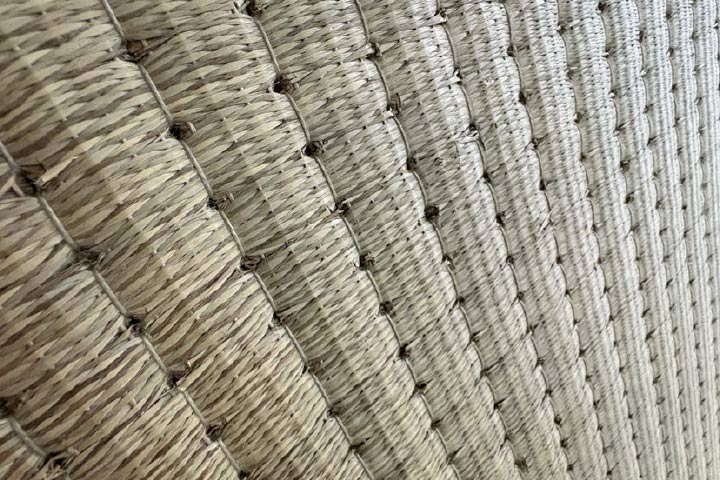
Tanba-ura
A rush mat coarsely woven from strong Igusa, sewn to the underside.
Historically produced in the Tanba region.
Considered a high-grade option.
Optional upgrade: +10,000 yen per mat (excluding tax)
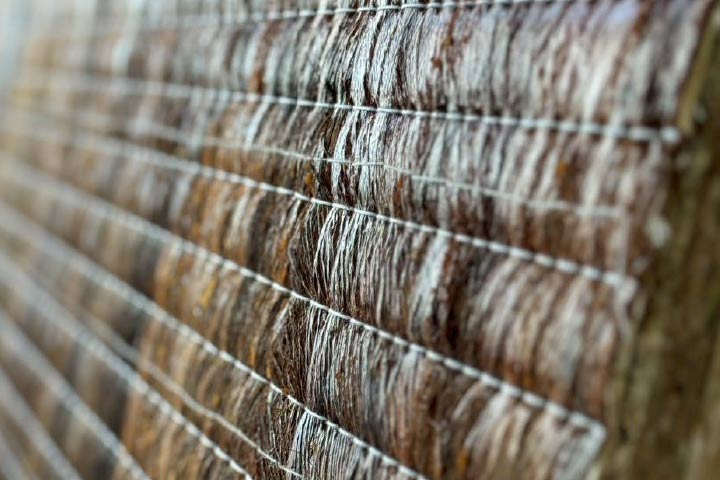
Shuro-ura (Trachycarpus back)
The highest-grade option.
Made from fibers of the Shuro (Chinese fan palm) plant, prized for excellent breathability, humidity resistance, and durability.
Optional upgrade: +15,000 yen per mat (excluding tax)
For grades “Nakatsugi” and “Yaltsushiro Prime”, shuro-fiber backing is included as the standard option, so no additional cost is required.
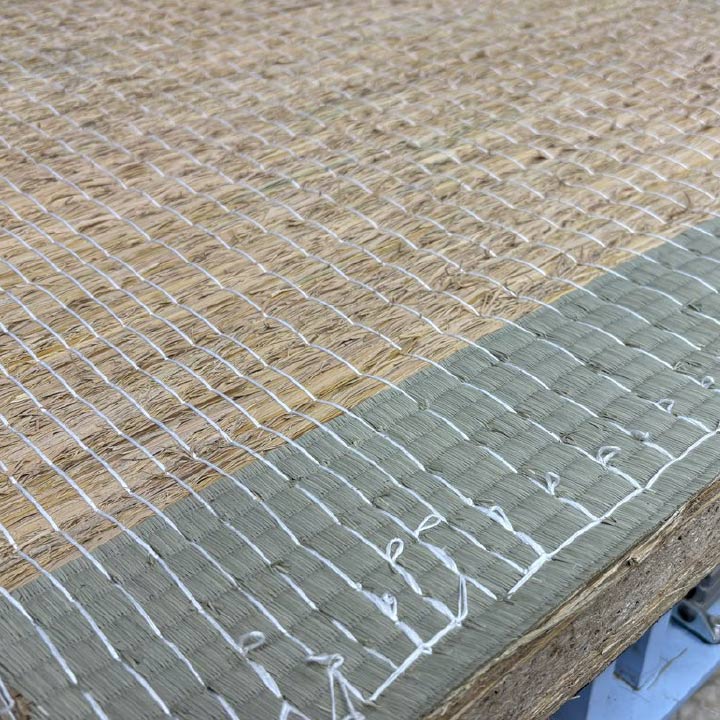
“Kuchigoza” Reinforcement
Because the edges of Wara-toko become thinner during production, “kuchigoza” is sewn onto both ends to create a uniform thickness. It also reinforces the tatami-beri (edge fabric), preventing threads from pulling out.
*Kuchigoza is available on Grade 1 and higher.

FAQ
Frequently Asked Questions About Wara-toko (Traditional Straw-filling Tatami)
-
Is it true that straw tatami is prone to mold or dust mites?
-
-
How do Wara-toko and synthetic fillings differ in price and lifespan?
-
Wara-toko, made from natural materials and requiring extensive handwork, is more expensive than synthetic fillings.
However, its lifespan is many times longer, making it essentially a “lifetime investment.”
Although the initial cost is higher, maintenance is minimal and future expenses are mainly for replacing the surface covering.
-
Is it true that straw tatami stays warm in winter and cool in summer compared to flooring?
-
Yes. The many air pockets within natural straw provide excellent insulation and moisture control.
This keeps rooms warmer in winter and naturally cooler in summer.
It is a benefit only natural materials can provide—one that synthetic insulation cannot replicate.
-
Can you check the condition of my floor or subfloor during tatami replacement?
-
Yes. When replacing tatami, we also inspect the condition of the flooring beneath.
Because Wara-toko has high moisture sensitivity, it reflects the condition of the subfloor—making it easier to detect early signs of termites or structural issues.
We provide advice to help preserve the long-term health of your home.