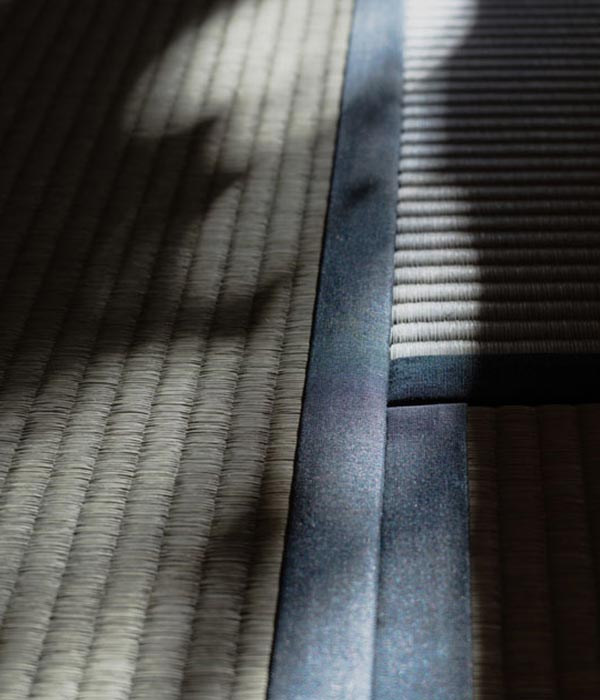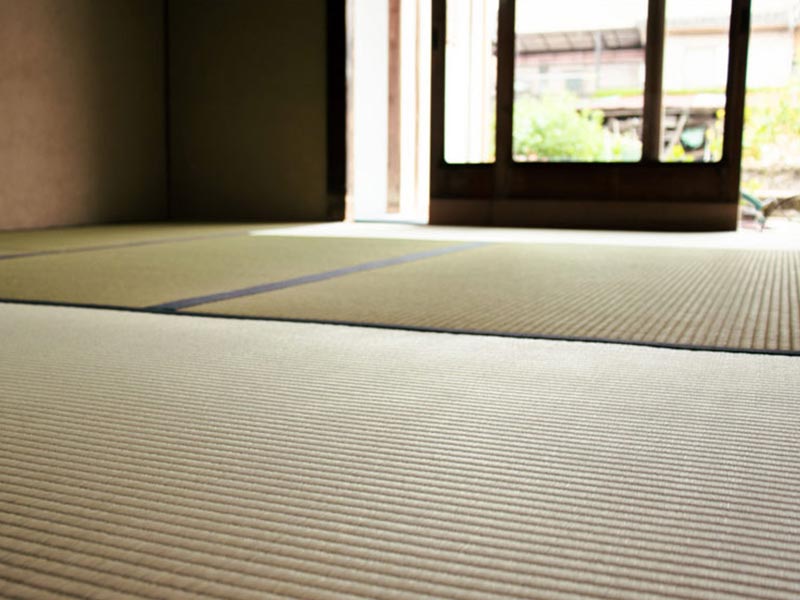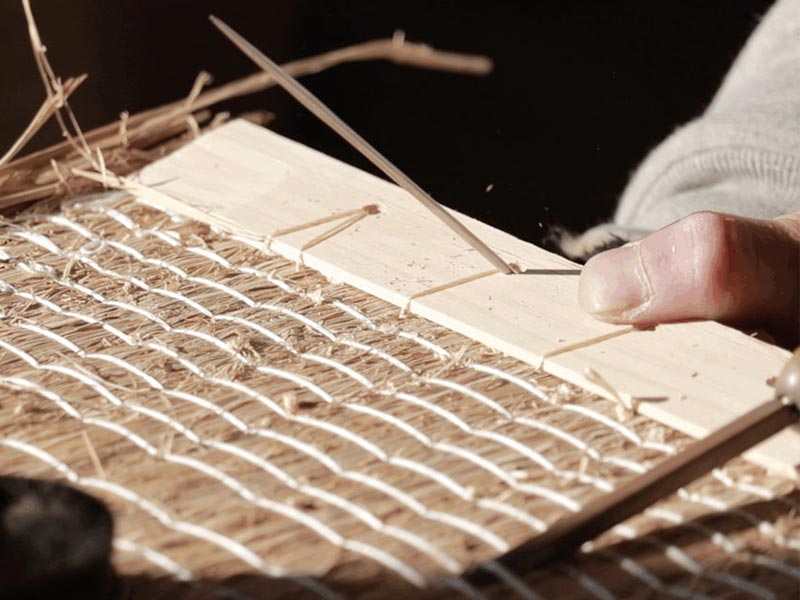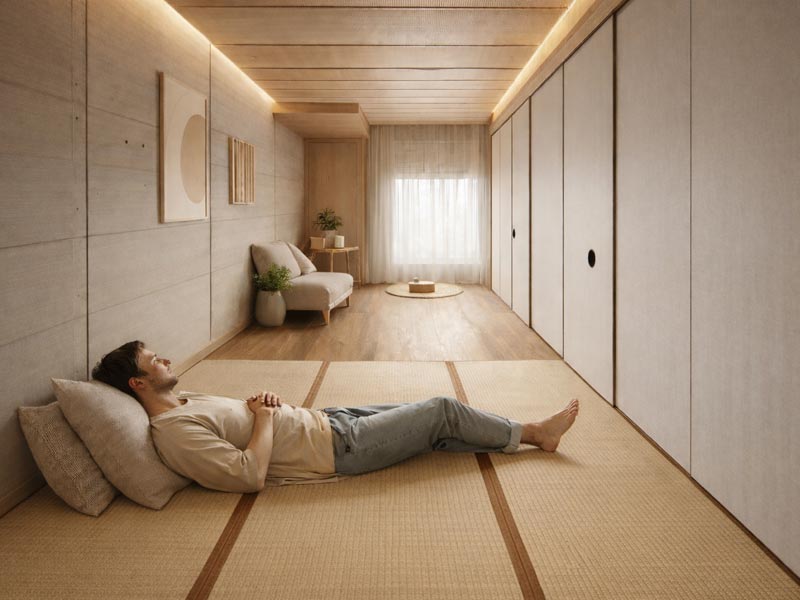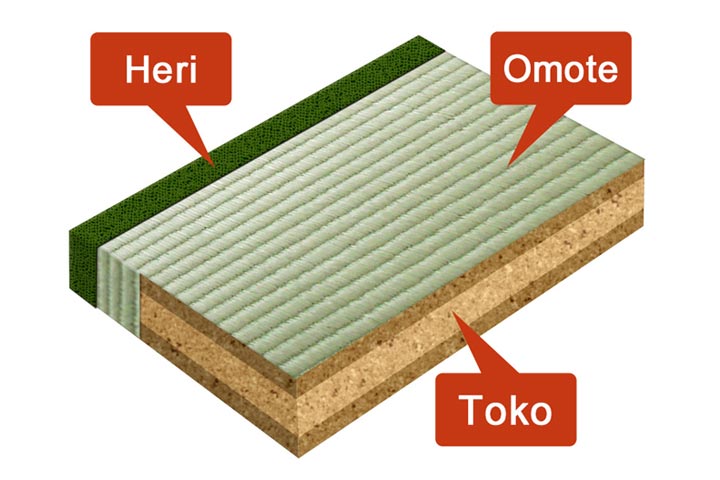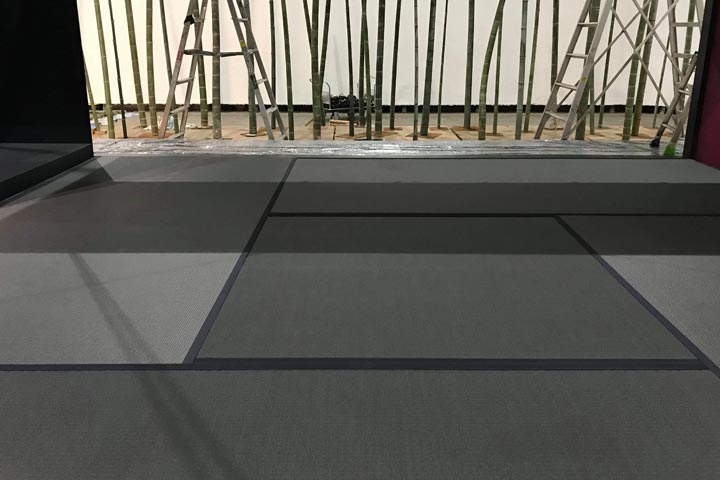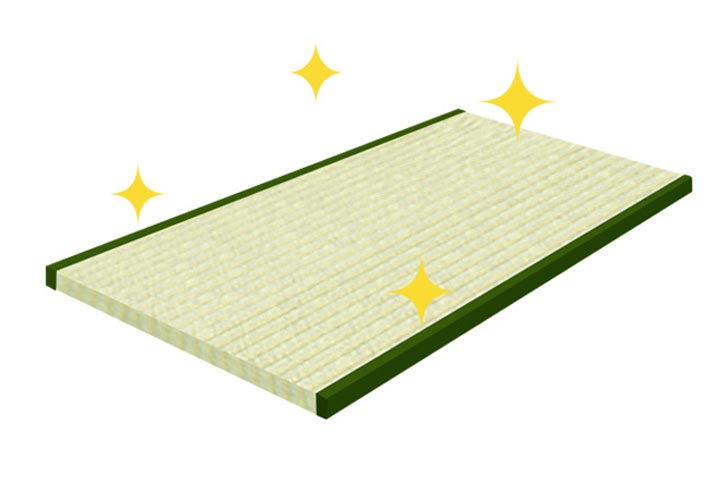
The basic structure of tatami is simple, comprising Toko (filling), omote (surface), and heri (border).
The filling (tatami toko) is made of multilayered rice straw, tightly fastened, and compressed. The surface (omote) is natural igusa (rush). Tatami consists basically of a filling, omote and heri edges crafted in to a rectangle. While this is a very simple explanation there are numerous other intricate elements used.
Now there are various new materials to make tatami but the basic idea hasn’t changed for centuries. Here are some features of the filling, omote and heri.
1 Tatami-toko(filling)
Traditionally, the filling is been made of ‘wara-toko’ (filling – multilayered 100% natural rice straw). However, due to changes in application and demand the filling no also can be made of made of light building materials like, styrofoam sandwiched between compressed wood-chip board.
Wara-toko (Natural straw filling)
Sandwich filling (Styrofoam)
Styro-toko comprises polystyrene foam sandwiched between straw. This has similar feeling to natural filling and is lighter than the total natural filling. This option has better humidity resilience than natural filling.
As the grades of filling differ, so does the straw included in the manufacture. The sandwich filling uses ‘Gomoku’ (crushed straw). The natural uses lengths of straw – increasing the quality and strength.

Top class sandwich filling

Standard sandwich filling
Kenzai-toko (Building material filling / non-natural)
There are three types of non-natural filling: insulation board made of compressed wood-chips; polystyrene foam sandwiched with board, and 100% board.
This options features: cheap, light-weight, good insulation and resistance to moisture. It also is resistant to mites and bugs. However, it is harder underfoot and less durable.

All board

Board sandwich

Board and foam

All board 15mm thick
2 Tatami-omote(surface)
Omote is graded. The highest grade of omote is generally found in scared places like shrines and temples, wealthy homes, and important spaces.
To gain a premium grade the omote has to be made from igusa of a certain length, quality and weave. High quality omote has four hemp strings, two at each weave, binding the igusa together, and is generally made of two mats weaved together in the centre; this forms a thick, strong mat. High quality Igusa used in these mats is only harvested once a year.
The most commonly used omote in Japanese homes and for international clients is the high to mid grades; this omote is still a premium product but is more readily available. The lower grades vary. There are still good products at this level. These mats do tend to have a shorter life span. This omote is good for areas of high use, where mats will need to be resurfaced more regularly. While omote vary in quality and look, the lowest grade Japanese omote is much higher quality than any other overseas product.
Weave
Hemp or cotton yarn is used to weave the igusa.
There are various options for the material used in the weave. The strength and durability of the weaving string determines how strong the omote is. With a stronger string it also means the strand count can increase making the surface thicker creating the chevron shape. The thread count also affects the feeling underfoot. Hemp is the strongest.

Bingo (top quality) double hemp

Bingo (second grade – still classifies above other omote) Cotton and hemp

Yume-omote / cotton and linen

Asa-biki / single hemp

Imported / double cotton

Imported / single cotton
Effect of Igusa
Igusa tatami increases the Indoor Environmental Quality (IEQ), which includes factors like: air quality, acoustics, and humidity. Tatami filters the air in a room, absorbing carbon dioxide, increasing the Indoor Air Quality (IAQ). The mats also act as insulation both for temperature and sound. The rush weave surface (omote) absorbs or expels moisture in the room when the seasons change. This absorption regulates humidity and the temperature in the space. These qualities are essential to a relaxing, healthy living environment.
Imported Products and Japanese-Made
In recent years, imported tatami omote have become more widely available, primarily due to their accessibility and lower production costs. While these products serve certain needs, there are important differences in materials and manufacturing processes when compared with Japanese-made tatami.
- Igusa used for imported tatami is generally harvested earlier than in Japan. Earlier harvesting results in a softer, lighter material, while igusa harvested at full maturity—common in Japan—offers greater durability over time.
- Drying methods also differ. Japanese-made tatami typically use igusa that is slowly dried at lower temperatures, preserving its natural moisture, resilience, and smooth surface. Imported products are often dried more quickly at higher temperatures, which can reduce elasticity and affect surface texture.
- In Japan, igusa selection and grading are carried out carefully at the farm level, ensuring consistency in color and quality. Imported tatami may rely on broader sourcing, which can lead to variation in appearance. In some cases, color adjustment treatments are applied, which may affect the natural fragrance and aging characteristics of the material.
Imported products continue to evolve and improve. However, Japanese-made tatami remain distinct for their emphasis on material maturity, careful processing, and long-term performance—values deeply rooted in traditional craftsmanship.

Imported Omote

Omote made in Japan

(Upper) Made in Japan
(Lower) Imported Omote
There are a wide range of omote due to various uses.
There are various kinds of omote for different needs: Meseki-omote, woven finer than usual; Ryukyu-omote, made from stronger igusa called Shitto-i; omote made of chemical fiber or paper, along with others.
※(Left picture) Ryuku-I (Shitto-i)
3 Tatami-heri(border)
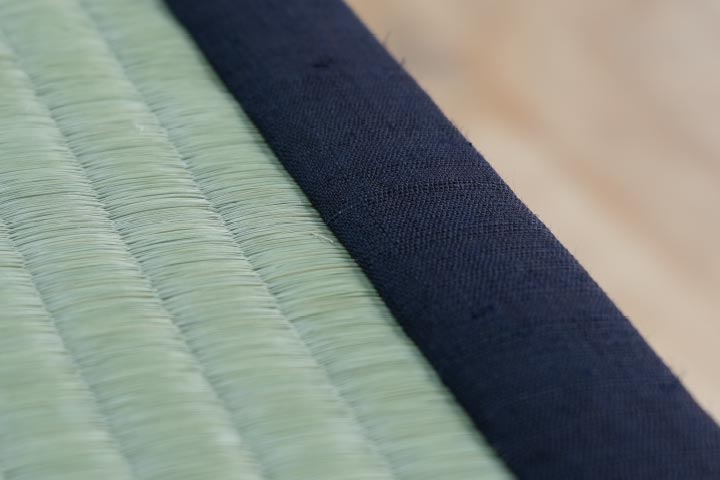
Heri used to be made from cotton or hemp but synthetic fiber has become mainstream these days. Synthetic cheaper and stronger, but in terms of sense of quality, the natural fiber is better. High class heri uses hemp.
Heri can be a plain single color or come with various patterns, including the special heri used for temples and the tokonoma (alcove)
About Kamachi

Kamachi 1

Kamachi 2
The shorter sides of tatami are called ‘kamachi’. If the filling (toko) is simply wrapped, the corners of filling will be damaged and swell.
In the past, ‘kamachi-ita (kamachi board)’ was sewn with the timber but now with more technology it can be sewn by machine. Traditional hand sewn wooden kamachi has a better end result in terms of look and quality.